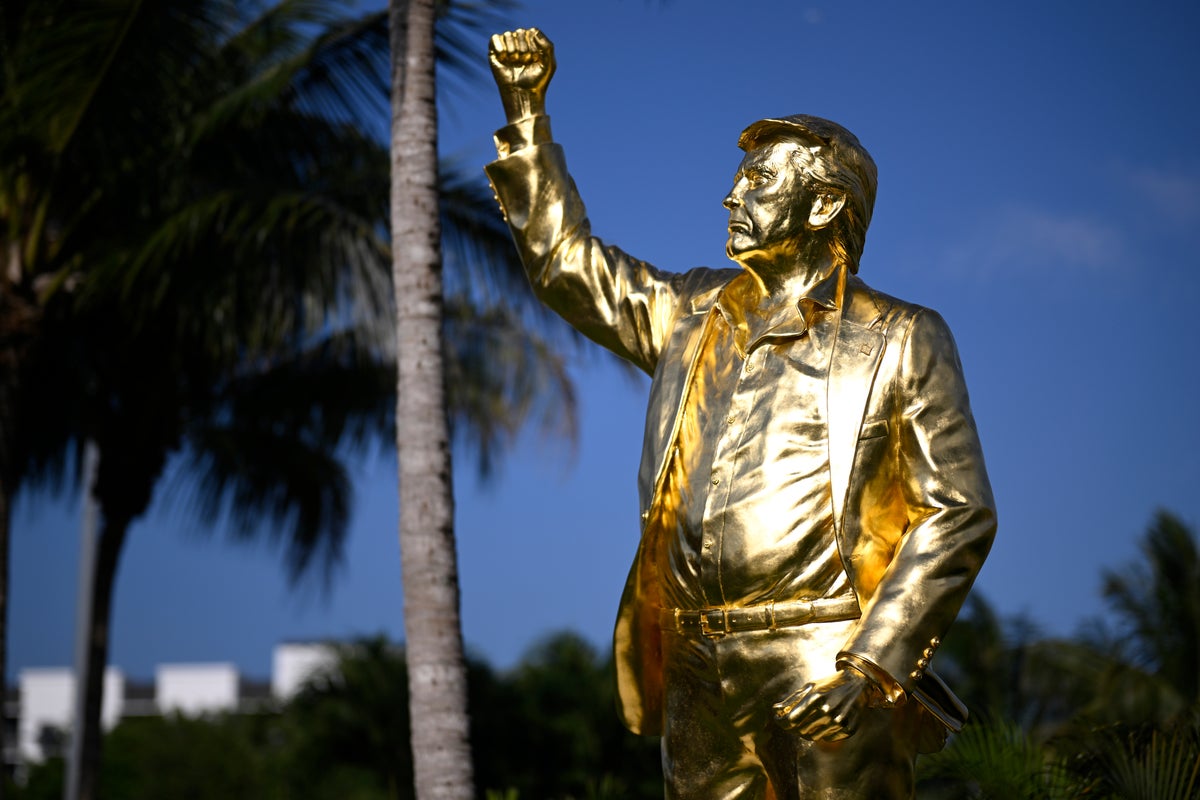
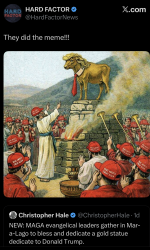
The internixing of politics and religious is quite a dangerous cocktail. Both include sets of beliefs involving articles of faith and the suspension of critical analysis. There is a reason society has ruled that it is best not to discuss politics or religion in polite company.
The separation of the two is not normal for human society.
In ancient China, Confucianism was the state-mandated religion. The Aztecs embraced an official state religion. Arab-muslim society unified the state and Islam. Eastern Orthodox civilization invented what it called caesaropapism, a close marriage between the head of state and the head of church. Only Western Christendom, due to the fracturing of political authority after the fall of the Western Empire, arrived at the separation of church and state (starting with Saint Ambrose forbidding the Emperor from entering the cathedral and receiving communion.
View attachment 56615
After the sixteenth century Wars of Religion, the solution was
Cujus regio, eius religio (Whose kingdom, his religion or everyone adopts the religion of their ruler). After the massive carnage of the 30 Years' War, Western Christians for the most part agreed to leave religious questions between each individual and God. Not everyone embraces this, but I would accept it as a standard of Western civilization, especially an American one.
Other civilizations did not embrace this, especially Islam.
If the United States continues to import muslim immigrants at the rate of 200,000/year, Americans will eventually see first-hand how "separation of church and state" is not an Islamic tenet. It will be jettisoned as soon as the political power to do so develops.