If I were king, that is a death sentence.

Glad you were deposed!


I ran an analysis a bit ago, asking what would be the savings for the average adult if we shifted our city designs from car/truck dependent to sized for walking, biking, public transportation, and ride sharing. I'm not saying we need to remove cars, just making the cities right sized for fewer cars by creating a city for safer and easier non-car transportation. The analysis showed we would save the average US family about $7,000 to $10,000 per year on average, since we won't need the additional costs of giant asphalt moats around every business, massive parking lots, 8 lane super highways, huge trauma hospitals, (Iranian wars) etc. that car dependent transportation requires.
I have zero sympathy for VW. You build a business model around taking advantage of temporary labor cost differences and now it is blowing up in their faces. This type of arrangement should make every American mad. Sadly, most just want cheaper cars.
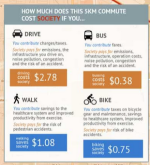
 thediscourse.ca


My father's handwriting and ledger of costs when we bought our 3 bedroom, 2 bath, split level home in Norfolk in 1955.
View attachment 56688
Dare I say it... Mayo...


that was disturbing

The old saying is still true: "It's not the high cost of living, but the cost of living high!" We rarely eat out any more...maybe 2x a month and only with family after church or close friends. The cost of dining out here in Charleston, SC is astronomical. But it doesn't bother me...we manage well.You know what I always find amusing......the always unreliable memes and twitter whines about how "the Boomers bought house X at price Y and lived in it for Z years and now it's worth 15X" blah blah blah. Then they will take an inflation calculator to prove the point they assumed to be true in the first place.
The part they never mention, of course, is that nobody today wants to live in a house that is the same standards and unchanged since 1955. Almost no homes back in those days had central air, if you had a television, it was black and white, and life expectancy was around 67 years old with no Medicare. Interstates were almost nonexistent (they were just beginning to be built) and healthcare was quite fragile - to the point that obituaries almost never mentioned "cancer" because it was considered a shame and scandal if that's what killed someone.
And that doesn't include cars that gave out at 100K miles while guzzling gas, homes built with asbestos, non-ADA friendly stairways in public buildings, or how much the whole damn world smelled like cigarette smoke.
It doesn't seem to dawn on a lot of the "my wages haven't kept up with my parents at the same age" that in part they're paying collectively to live in a better world with more access to more things designed to improve the quality of life.
Again - I don't say this to pretend for a second that there aren't some issues with money, but I also think a lot of folks born after 1985 or later don't get the conveniences they have that they don't even know. Let me give a prominent one: eating out. Yes, even fast food.
I'll be honest with you: I do not remember our family "eating out at a restaurant" (even a fast food one) hardly at all prior to 1982 or so. Prior to around 1979, Mom made sandwiches (George Costanza going mountain climbing style) and loaded up a cooler for the long haul. (I still recall stopping to consume calories on then two-lane Hwy 78 somewhere between New Albany (MS) and Memphis back in 1975, followed by a short trek into the woods to relieve ourselves). But other than TRAVELING down the road, we NEVER - and I mean NEVER - went out to dinner (Dad and Mom would go to the base club about once a month for steak dinner and music but never us kids).
I remember it being a big deal in the fall of 1979 when McDonald's had their Big Macs for (I think it was) a quarter. So we loaded up the truck and went down and bought maybe 12 Big Macs. No kids, can't have your usual burger, you get the cheap one with all the nasty sauce on it. But for them that was going to cover 3 days' worth of dinner for the (then) four of us.
We never - not once - went to Pizza Hut as a family. Not one time.
We didn't go anywhere like that.
There were a few times a year when for convenience we went fast food - and for us it was like going to Tavern on the Green or whatever.
My son probably eats out more in a month than we ate out as a family in five years if you exclude the traveling (which was always and only to the grandparents; seriously, we never had a single vacation until I was nearly 14 years old and then it was a weekend).
That world still exists but how many of today's people want to live in that world of those limitations?
As black conservative Kevin Williams (then National Review) said - the 1957 lifestyle is still available today; it's just that nobody wants it.
that was disturbing
You know what I always find amusing......the always unreliable memes and twitter whines about how "the Boomers bought house X at price Y and lived in it for Z years and now it's worth 15X" blah blah blah. Then they will take an inflation calculator to prove the point they assumed to be true in the first place.
The part they never mention, of course, is that nobody today wants to live in a house that is the same standards and unchanged since 1955. Almost no homes back in those days had central air, if you had a television, it was black and white, and life expectancy was around 67 years old with no Medicare. Interstates were almost nonexistent (they were just beginning to be built) and healthcare was quite fragile - to the point that obituaries almost never mentioned "cancer" because it was considered a shame and scandal if that's what killed someone.
And that doesn't include cars that gave out at 100K miles while guzzling gas, homes built with asbestos, non-ADA friendly stairways in public buildings, or how much the whole damn world smelled like cigarette smoke.
It doesn't seem to dawn on a lot of the "my wages haven't kept up with my parents at the same age" that in part they're paying collectively to live in a better world with more access to more things designed to improve the quality of life.
Again - I don't say this to pretend for a second that there aren't some issues with money, but I also think a lot of folks born after 1985 or later don't get the conveniences they have that they don't even know. Let me give a prominent one: eating out. Yes, even fast food.
I'll be honest with you: I do not remember our family "eating out at a restaurant" (even a fast food one) hardly at all prior to 1982 or so. Prior to around 1979, Mom made sandwiches (George Costanza going mountain climbing style) and loaded up a cooler for the long haul. (I still recall stopping to consume calories on then two-lane Hwy 78 somewhere between New Albany (MS) and Memphis back in 1975, followed by a short trek into the woods to relieve ourselves). But other than TRAVELING down the road, we NEVER - and I mean NEVER - went out to dinner (Dad and Mom would go to the base club about once a month for steak dinner and music but never us kids).
I remember it being a big deal in the fall of 1979 when McDonald's had their Big Macs for (I think it was) a quarter. So we loaded up the truck and went down and bought maybe 12 Big Macs. No kids, can't have your usual burger, you get the cheap one with all the nasty sauce on it. But for them that was going to cover 3 days' worth of dinner for the (then) four of us.
We never - not once - went to Pizza Hut as a family. Not one time.
We didn't go anywhere like that.
There were a few times a year when for convenience we went fast food - and for us it was like going to Tavern on the Green or whatever.
My son probably eats out more in a month than we ate out as a family in five years if you exclude the traveling (which was always and only to the grandparents; seriously, we never had a single vacation until I was nearly 14 years old and then it was a weekend).
That world still exists but how many of today's people want to live in that world of those limitations?
As black conservative Kevin Williams (then National Review) said - the 1957 lifestyle is still available today; it's just that nobody wants it.
Good points indeed. And ones I make to my kids routinely.
Boiled down to the basics of living a frugal life, finding a house and buying a house is still more expensive. Those 1950s houses are no longer built because they don't make the moneys!
As black conservative Kevin Williams (then National Review) said - the 1957 lifestyle is still available today; it's just that nobody wants it.


Just thinking about those great days that us college educated elite are living. What about all the others? What about the 42.1 million Americans receiving food stamps today versus the 17.3 million in 2001. We would all agree that many of the recepients should not be receiving benefits but certainly not all.You know what I always find amusing......the always unreliable memes and twitter whines about how "the Boomers bought house X at price Y and lived in it for Z years and now it's worth 15X" blah blah blah. Then they will take an inflation calculator to prove the point they assumed to be true in the first place.
The part they never mention, of course, is that nobody today wants to live in a house that is the same standards and unchanged since 1955. Almost no homes back in those days had central air, if you had a television, it was black and white, and life expectancy was around 67 years old with no Medicare. Interstates were almost nonexistent (they were just beginning to be built) and healthcare was quite fragile - to the point that obituaries almost never mentioned "cancer" because it was considered a shame and scandal if that's what killed someone.
And that doesn't include cars that gave out at 100K miles while guzzling gas, homes built with asbestos, non-ADA friendly stairways in public buildings, or how much the whole damn world smelled like cigarette smoke.
It doesn't seem to dawn on a lot of the "my wages haven't kept up with my parents at the same age" that in part they're paying collectively to live in a better world with more access to more things designed to improve the quality of life.
Again - I don't say this to pretend for a second that there aren't some issues with money, but I also think a lot of folks born after 1985 or later don't get the conveniences they have that they don't even know. Let me give a prominent one: eating out. Yes, even fast food.
I'll be honest with you: I do not remember our family "eating out at a restaurant" (even a fast food one) hardly at all prior to 1982 or so. Prior to around 1979, Mom made sandwiches (George Costanza going mountain climbing style) and loaded up a cooler for the long haul. (I still recall stopping to consume calories on then two-lane Hwy 78 somewhere between New Albany (MS) and Memphis back in 1975, followed by a short trek into the woods to relieve ourselves). But other than TRAVELING down the road, we NEVER - and I mean NEVER - went out to dinner (Dad and Mom would go to the base club about once a month for steak dinner and music but never us kids).
I remember it being a big deal in the fall of 1979 when McDonald's had their Big Macs for (I think it was) a quarter. So we loaded up the truck and went down and bought maybe 12 Big Macs. No kids, can't have your usual burger, you get the cheap one with all the nasty sauce on it. But for them that was going to cover 3 days' worth of dinner for the (then) four of us.
We never - not once - went to Pizza Hut as a family. Not one time.
We didn't go anywhere like that.
There were a few times a year when for convenience we went fast food - and for us it was like going to Tavern on the Green or whatever.
My son probably eats out more in a month than we ate out as a family in five years if you exclude the traveling (which was always and only to the grandparents; seriously, we never had a single vacation until I was nearly 14 years old and then it was a weekend).
That world still exists but how many of today's people want to live in that world of those limitations?
As black conservative Kevin Williams (then National Review) said - the 1957 lifestyle is still available today; it's just that nobody wants it.


There are aspects of Selma's most recent post that are spot on. However, there are required expenses that exist in today's society that didn't "back in the day" and there's not an option to "just do without it".
Having kids in school "today":
Internet- I don't know a school that doesn't indirectly require a household to have internet. The schools my kids attend (which are both private and public) do not have homework or assignments on physical paper anymore. It is done and submitted online through an educational app used by the school districts. Also, both the public and private schools my kids attend have "virtual days" where the kids don't attend school but complete and turn in assignments from home during the day. Approximate monthly cost to be able to do this: $80/month
Laptop/iPad/Devices-Schools first attempted to provide devices for students to take home. But they were being stolen at an alarming rate, so that is no longer the case. Now, a household has to provide (at least in our area) their own devices to access the internet and the school educational app to do assignments. The cost of one of these devices can range from $350-$1,200. If you have more than one child in school, you either have to share the device or buy multiple. I don't see an option of not having one in your home and your child still getting the work done.
Cell phone- I know it is every parent's desire to wait as long as possible before letting their children have a cell phone and the ultimate desire is for them never to have one. But when school functions, and other things affiliated with the school operate with the assumption that kids can notify their parents instantly of a change that impacts pickup, dismissal, school transportation, destination, etc. You realize real quick that society doesn't care about your desire of not letting your child have a phone. As much as my wife and I loathed getting our kids (once they reached a certain age) a cell phone, we ended up having to. So add some more monthly costs that we have today that didn't exist back then: $20-$30/month/user
The above isn't even getting into that every four years our house note goes up due to re-assessment of property values and the yearly increase in home owners insurance.
I could add to the list of things that keep rising in cost that don't have an option of doing without them. Also, many working Americans lose purchasing power by their employer not giving a cost of living raise each year or giving one that doesn't equal inflation. My wife and I's employer likes to tell us they give a cost of living raise "every year". That's all well and good until you realize it is 1.2% and has been for the last FIFTEEN years. Did I also mention during this same 15 years the insurance package has been "adjusted" over the years where the employees pay more for their portion and the employer pays less? Add to that co payments have also risen.
It's death by a thousand papercuts that just accumulate and before you know it, you look at your W2, look around, and go "Something ain't adding up".

I live on Monte Sano in Huntsville, a neighborhood very much in flux. It started being extensively subdivided and developed around 1950, although there were some houses up here for decades before that. Most of the housing was, for years, 1950-style houses. Now, 1950-style houses are being torn down right and left and McMansions being built in their place. There are a lot of advantages to living on a mountain, along with obvious disadvantages. One huge advantage is cooler temps in the summer. We're only 1000' above the valley, but, in summer, the widest variation I've seen is 14F cooler than downtown. More typical is 5-6F cooler. The main reason it's so much cooler is forestation. Half the plateau is in a forested state park. The other half was urban forested, with plenty of mature trees. Now, with every McMansion built, generally all the trees are cut down. One of the few unbuilt areas left was a plot of two lots. Someone is building one house spanning both. ALL the trees were cut down. The result is that the daytime temps are inexorably rising, bit by bit. So, they are defeating one of the principal reasons for moving up here in the first place. All we older mountaineers are just left shaking our heads...


