


Personal Finance: Financial Planning & Investing
- Thread starter BamaNation
- Start date
You are using an out of date browser. It may not display this or other websites correctly.
You should upgrade or use an alternative browser.
You should upgrade or use an alternative browser.
The current unsettled markets are a great example of an old adage, "The markets don't like bad news. But they can handle it. What they can't handle is uncertainty." That's really referring to an ex cathedra injection of uncertainty beyond the normal everyday level that's just part of life.
When we and the Israelis attacked Iran, that injected a new level of uncertainty and the markets reacted in a predictable manner.
Note that oil tankers aren't moving out of the Strait of Hormuz because anybody's blockading it. They're not moving because they're afraid of being hit by a drone. While I have exactly zero experience with maritime insurance, I do know that property insurance underwriters typically exclude damage caused by a war, declared or undeclared. So I'm guessing a tanker sunk by an Iranian drone would be an uninsured loss.
The owner of the tanker and the owner of the oil it carries would rather wait a bit than risk the loss, especially if it's uninsured. The very definition of uncertainty.
There is no stoppage of oil production except because there's no place to put it. The US is the world's largest exporter of oil, so there's no problem here. But prices are increasing because nobody knows what's going to happen or how long the disruption will last.
This too will pass. If it passes quickly, things will likewise return to normal quickly. If it takes a while, the higher level of uncertainty will become the new normal and the markets will incorporate it into their evaluations.
Either way, keep calm and invest on.
When we and the Israelis attacked Iran, that injected a new level of uncertainty and the markets reacted in a predictable manner.
Note that oil tankers aren't moving out of the Strait of Hormuz because anybody's blockading it. They're not moving because they're afraid of being hit by a drone. While I have exactly zero experience with maritime insurance, I do know that property insurance underwriters typically exclude damage caused by a war, declared or undeclared. So I'm guessing a tanker sunk by an Iranian drone would be an uninsured loss.
The owner of the tanker and the owner of the oil it carries would rather wait a bit than risk the loss, especially if it's uninsured. The very definition of uncertainty.
There is no stoppage of oil production except because there's no place to put it. The US is the world's largest exporter of oil, so there's no problem here. But prices are increasing because nobody knows what's going to happen or how long the disruption will last.
This too will pass. If it passes quickly, things will likewise return to normal quickly. If it takes a while, the higher level of uncertainty will become the new normal and the markets will incorporate it into their evaluations.
Either way, keep calm and invest on.


Great article from Morningstar on things investment salespeople tell you to get you to part with your money -- that aren't exactly accurate.
I'd add another one to the mortgage warning -- they tell you that your mortgage interest is tax deductible. And it might be. Or maybe not.
The deal is, you can take the Standard Deduction, or you can Itemize your deductions. You can't do both.
The standard deduction for a married couple is now $32K. So you have to have more than $32K of itemized deductions (mortgage interest, charitable contributions, etc.) in order to benefit from Itemizing.
If you don't have that much in Itemized deductions, you just take the Standard Deduction. Meaning you get to deduct the full $32K even if you have $0 in mortgage interest and didn't give anything to any charities.
So maybe your mortgage interest can reduce your taxable income. Maybe not. You need to understand your own personal situation.
I'd add another one to the mortgage warning -- they tell you that your mortgage interest is tax deductible. And it might be. Or maybe not.
The deal is, you can take the Standard Deduction, or you can Itemize your deductions. You can't do both.
The standard deduction for a married couple is now $32K. So you have to have more than $32K of itemized deductions (mortgage interest, charitable contributions, etc.) in order to benefit from Itemizing.
If you don't have that much in Itemized deductions, you just take the Standard Deduction. Meaning you get to deduct the full $32K even if you have $0 in mortgage interest and didn't give anything to any charities.
So maybe your mortgage interest can reduce your taxable income. Maybe not. You need to understand your own personal situation.
Last edited:
Schwab is now offering an investment account for teens -- 13-17.
It's jointly owned by a parent and the teen, has no maintenance fees or minimum investment amounts, and includes access to a lot of financial education material.
Note: Not having teens myself, I have no personal experience with the account. As always, caveat emptor.
Still, it might be a fit for you and your teenager. Worth a look anyway.
It's jointly owned by a parent and the teen, has no maintenance fees or minimum investment amounts, and includes access to a lot of financial education material.
Note: Not having teens myself, I have no personal experience with the account. As always, caveat emptor.
Still, it might be a fit for you and your teenager. Worth a look anyway.

It appears the midterm correction I mentioned in an earlier post is now underway. The Nasdaq hit correction territory today and the Dow and S&P could shortly follow in the days and weeks ahead. Like any correction it needed something to trigger it and in this case it was the war with Iran. The severity of the correction will depend on the duration and the successes and failures of the war. War is not new for the market. Only our adversary is different each time. If we put boots on the ground there will no doubt be casualties that could cause additional panic selling but I'd advise everyone to stick to their plan. Corrections end and the market recovers the losses. The only move anyone could consider is perhaps adding to their stock investments on extreme weakness IF they are under-invested. Everyone else should sit tight, don't panic and the market turmoil will pass in time.

The downturn is not the result of fundamental economic over-extension. It's the result of an ex cathedra injection of risk.It appears the midterm correction I mentioned in an earlier post is now underway. The Nasdaq hit correction territory today and the Dow and S&P could shortly follow in the days and weeks ahead. Like any correction it needed something to trigger it and in this case it was the war with Iran. The severity of the correction will depend on the duration and the successes and failures of the war. War is not new for the market. Only our adversary is different each time. If we put boots on the ground there will no doubt be casualties that could cause additional panic selling but I'd advise everyone to stick to their plan. Corrections end and the market recovers the losses. The only move anyone could consider is perhaps adding to their stock investments on extreme weakness IF they are under-invested. Everyone else should sit tight, don't panic and the market turmoil will pass in time.
The stock market may swing too far the other way. That happens a lot with external shocks.
So long as you have at least one business cycle left in your investing career, you're absolutely right to keep on keeping on.
I think that if you dial back equities as you approach retirement and keep a short term/less risky bucket to fund three to five years of retirement cash flow, your investment career really never ends. In fact, it becomes less risky to rebuild your equity percentage once you are into retirement a bit. You just have to keep that cash/low yielding bucket full so that you're not forced to liquidate growth assets during a downturn.The downturn is not the result of fundamental economic over-extension. It's the result of an ex cathedra injection of risk.
The stock market may swing too far the other way. That happens a lot with external shocks.
So long as you have at least one business cycle left in your investing career, you're absolutely right to keep on keeping on.
You're absolutely right. That's exactly what Mrs. Basket Case and I have. So it results in a bit more equity exposure than the often-cited retirees' 60% equity / 40% bond split.I think that if you dial back equities as you approach retirement and keep a short term/less risky bucket to fund three to five years of retirement cash flow, your investment career really never ends. In fact, it becomes less risky to rebuild your equity percentage once you are into retirement a bit. You just have to keep that cash/low yielding bucket full so that you're not forced to liquidate growth assets during a downturn.
Given today's yield curve, I'm also wary of any bond term longer than a year or two. Longer-term bonds (defined as 5 - 10 years or more to maturity) just get hammered if interest rates go up, and don't yield enough extra to offset that risk.
Our fixed income stuff is money market out to a year or less. We don't give up much income and avoid a whole lot of risk.

I paid Uncle Sam an extra $6000 in April. My good fortune, I suppose. I talked to my investment adviser, and he said it was mostly due to capital gains taxes.
Maybe I will get a part-time job and earn enough to break even next tax season. .
.
I'm having too much fun in retirement to go back to working F/T.
Maybe I will get a part-time job and earn enough to break even next tax season.
.I'm having too much fun in retirement to go back to working F/T.

This is after the fact. So throwing rocks is admittedly easy now. But the Basket Cases didn’t invest SpaceX and would not have under any circumstances.
Any individual stock, but especially one whose value is a function of not only (1) future earnings, but (2) future earnings increasing at an increasing rate, is not something I would buy. Remember the craze for cannabis stocks a few years ago? How’s that working?
We didn’t buy and wouldn’t. Maybe except as an analogue to a football bet less than $1K. If I win, great. If not, I’m not hurt too bad.
For every Amazon or Apple, there are several dozen Netscapes and Compaqs.
Buying that type of stock is no different from betting green 0 or 00 on a roulette wheel. If the amount is small enough to lose and walk away thinking, “Well, dang. But it was a good time and I’d do it again,” fine. Knock yourself out.
But thinking you’re going to go from Joe and Jane Schmoo to private jets……that’s Brandon Sorsby kind of thinking.
Any individual stock, but especially one whose value is a function of not only (1) future earnings, but (2) future earnings increasing at an increasing rate, is not something I would buy. Remember the craze for cannabis stocks a few years ago? How’s that working?
We didn’t buy and wouldn’t. Maybe except as an analogue to a football bet less than $1K. If I win, great. If not, I’m not hurt too bad.
For every Amazon or Apple, there are several dozen Netscapes and Compaqs.
Buying that type of stock is no different from betting green 0 or 00 on a roulette wheel. If the amount is small enough to lose and walk away thinking, “Well, dang. But it was a good time and I’d do it again,” fine. Knock yourself out.
But thinking you’re going to go from Joe and Jane Schmoo to private jets……that’s Brandon Sorsby kind of thinking.
My plan was to just watch it. In 2-3 months people will take profits....especially the employees, and then I will likely buy some.
The reason SpaceX isn't like your examples is that they put cargo into space better, faster, and cheaper than most anyone else.
I'm certainly not thinking along the lines of your last sentence. I do think it'll work out well, but now is not the time to buy it.
Edit: The stock price today is almost back to where it was at the IPO.
The reason SpaceX isn't like your examples is that they put cargo into space better, faster, and cheaper than most anyone else.
I'm certainly not thinking along the lines of your last sentence. I do think it'll work out well, but now is not the time to buy it.
Edit: The stock price today is almost back to where it was at the IPO.

i think it is all of the other crap that is being loaded onto spacex that is giving a lot of folks pauseMy plan was to just watch it. In 2-3 months people will take profits....especially the employees, and then I will likely buy some.
The reason SpaceX isn't like your examples is that they put cargo into space better, faster, and cheaper than most anyone else.
I'm certainly not thinking along the lines of your last sentence. I do think it'll work out well, but now is not the time to buy it.
Edit: The stock price today is almost back to where it was at the IPO.
I agree.i think it is all of the other crap that is being loaded onto spacex that is giving a lot of folks pause
Here's a video from Morningstar. The interviewee is Christine Benz, who is a Morningstar executive. She's one of my favorite financial thinkers. Does an excellent job of presenting investing in general and various investments in particular in a way that anybody can understand.
In this video (which also has a text transcript you can simply read), she discusses what people between 15 and 35 years out from retirement should be doing.
For this age cohort, Benz recommends a portfolio of 90% stocks. I have no problem with that, and provided you've accumulated a 3-6 month emergency fund in cash or money market accounts, I might go higher.
One quibble -- Within the 90% equity allocation, she recommends a 60/40 split between US and international stocks. I think 40% international is too high.
The reasons are for my position are:
(1) The largest US-headquartered companies also have huge international presences. So there's a fair amount of international diversification just baked into the S&P and even NASDAQ or Russell index funds.
(2) The demographics for most European and Asian countries are not good. Way too few young people. Which isn't hurting so much right now, but will become more and more painful as time goes on and the OFC dies off. Which is a big issue if you're investing with a 15 - 35 year time horizon.
The US isn't perfect on this, but has Mexico as both a market and source of labor. So temporary immigration policy notwithstanding, we are more insulated than Germany, Italy, the UK, Scandinavia, and even France.
(3) In so-called Emerging Markets, it's kind of like going to Las Vegas. You'll have a few winners and the risk of a lot of losers. Mainly because the political situations in these countries aren't exactly stable. So the threat of nationalized industries (IOW, the government stealing your company's assets by force) is high. As is the threat of civil wars, other unchecked violence, and questionable enforceability of contracts.
So I just don't think the potential returns of Emerging Markets are worth the risks.
So sez me. The fact that I don't agree with Ms. Benz on every single point doesn't mean she's not offering really good advice. The interview is definitely worth your time.
In this video (which also has a text transcript you can simply read), she discusses what people between 15 and 35 years out from retirement should be doing.
For this age cohort, Benz recommends a portfolio of 90% stocks. I have no problem with that, and provided you've accumulated a 3-6 month emergency fund in cash or money market accounts, I might go higher.
One quibble -- Within the 90% equity allocation, she recommends a 60/40 split between US and international stocks. I think 40% international is too high.
The reasons are for my position are:
(1) The largest US-headquartered companies also have huge international presences. So there's a fair amount of international diversification just baked into the S&P and even NASDAQ or Russell index funds.
(2) The demographics for most European and Asian countries are not good. Way too few young people. Which isn't hurting so much right now, but will become more and more painful as time goes on and the OFC dies off. Which is a big issue if you're investing with a 15 - 35 year time horizon.
The US isn't perfect on this, but has Mexico as both a market and source of labor. So temporary immigration policy notwithstanding, we are more insulated than Germany, Italy, the UK, Scandinavia, and even France.
(3) In so-called Emerging Markets, it's kind of like going to Las Vegas. You'll have a few winners and the risk of a lot of losers. Mainly because the political situations in these countries aren't exactly stable. So the threat of nationalized industries (IOW, the government stealing your company's assets by force) is high. As is the threat of civil wars, other unchecked violence, and questionable enforceability of contracts.
So I just don't think the potential returns of Emerging Markets are worth the risks.
So sez me. The fact that I don't agree with Ms. Benz on every single point doesn't mean she's not offering really good advice. The interview is definitely worth your time.
Last edited:
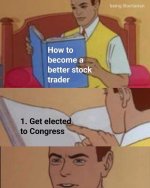


The Saturday-Sunday WSJ from this past weekend has a half-page article titled, "How to Build a Retirement That Actually Fits Your Life." It contains one of the best sound-bites I've seen in a while, this one from William Bernstein:
"BMWs, fancy clothes and Birkin bags aren't lifestyle choices....they're IQ tests."
I'd qualify that saying they're OK if:
1. You've already maxed out all tax-advantaged retirement options for a minimum of 5 years.
That's truly maxed out, not reached the limit your employer will match.
If you're 49 or younger, that's $24.5K in annual contributions to your 401k. $32.5K annually if you're 50 or over, and $35.75K a year if you're 60 or over and still working.
Plus $7,500 in IRA contributions ($8,600 if you're 50 or over).
So depending on your age, truly maxing out 401ks and IRAs is between $32K and $44,350.
and
2. You can pay for the new toys with no borrowings of any kind -- not on dealer financing no matter how low the interest rate, not a draw on a HELOC, and definitely not by carrying a balance on a credit card.
If you've done both of those things, I think you can loosen the strings a little. Emphasis on a little.
"BMWs, fancy clothes and Birkin bags aren't lifestyle choices....they're IQ tests."
I'd qualify that saying they're OK if:
1. You've already maxed out all tax-advantaged retirement options for a minimum of 5 years.
That's truly maxed out, not reached the limit your employer will match.
If you're 49 or younger, that's $24.5K in annual contributions to your 401k. $32.5K annually if you're 50 or over, and $35.75K a year if you're 60 or over and still working.
Plus $7,500 in IRA contributions ($8,600 if you're 50 or over).
So depending on your age, truly maxing out 401ks and IRAs is between $32K and $44,350.
and
2. You can pay for the new toys with no borrowings of any kind -- not on dealer financing no matter how low the interest rate, not a draw on a HELOC, and definitely not by carrying a balance on a credit card.
If you've done both of those things, I think you can loosen the strings a little. Emphasis on a little.
Disclaimer: Posting this for entertainment purposes only. 
Ran across an article on this company yesterday. Made me curious enough to look up the stock price.
I was amazed to see this:
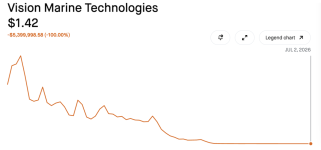
Then way beyond amazed when I checked to see what it was at it's peak.
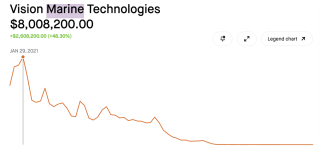
Up until yesterday, it had never entered my mind that such a scenario could even exist.
That looks like a long ride down the mountain.
Ran across an article on this company yesterday. Made me curious enough to look up the stock price.
I was amazed to see this:
Then way beyond amazed when I checked to see what it was at it's peak.
Up until yesterday, it had never entered my mind that such a scenario could even exist.
That looks like a long ride down the mountain.
That's obviously a six-sigma extreme example. But lots of individual stocks have gone to zero or near zero. Many of them were household names, not high-flying IPOs.Disclaimer: Posting this for entertainment purposes only.
Ran across an article on this company yesterday. Made me curious enough to look up the stock price.
I was amazed to see this:
View attachment 57808
Then way beyond amazed when I checked to see what it was at it's peak.
View attachment 57809
Up until yesterday, it had never entered my mind that such a scenario could even exist.
That looks like a long ride down the mountain.
And that right there is exactly why a lot of people, including me, gravitate toward mutual funds.
To use a couple of baseball metaphors: You won't hit a bunch of home runs. But you won't go 0-fer either. You will make it to financial security by hitting lots of singles, a few doubles, seldom striking out, and doing that every single paycheck, every single stinkin' year for a working career.
For the OFC: You're Rod Carew, not Mickey Mantle. Both are in the HOF.
To quote Barrett Jones on Nick Saban’s Process: “The secret to The Process is that there are no secrets. But there are also no shortcuts.”
Last edited:


Trending content


Latest threads
-

-
 ESPN: Mike Lombardi leave the latest cloud for Bill Beli...
- Started by TideFans Reporter
- Replies: 0
-
 Fauci's diary released - he lied?
- Started by crimsonaudio
- Replies: 10
-
ESPN: DE Prescott, No. 36 recruit for '28, chooses Irish...
- Started by TideFans Reporter
- Replies: 0
-
ESPN: Brian Hartline is readying USF for the next shift ...
- Started by TideFans Reporter
- Replies: 0
-
ESPN: Manuel gets $7.14M, other perks in U-M buyout
- Started by TideFans Reporter
- Replies: 0