
Have you read "Four Hours of Fury?"It's not great. The author copies huge swaths of text from veterans' recollections. The resulting text comes across as jumbled, but it is fairly intense.


Have you read "Four Hours of Fury?"It's not great. The author copies huge swaths of text from veterans' recollections. The resulting text comes across as jumbled, but it is fairly intense.

I have not. Looks good though.Have you read "Four Hours of Fury?"
My Dad's Battalion 244th FA fired support for XII Corp crossing and then crossed the pontoon bridge on 24th March, 75 years ago tomorrow. In the months prior to reaching the Rhine the unit had moved every day, in support of the 4th armored advance, and sometimes twice per day. You can appreciate what is involved in leveling a firing position, erecting camouflage, digging slit trenches and being prepared for firing orders 24 hours a day. The unit finally took a break in Vacha, Germany in April. I have some photos of 22-24 year old soldiers who looked much older from exhaustion.Just for background, my parents worshiped FDR, and that was the way I was raised. The day he died, we cried all day long. Most of the people we knew felt the same...
Today's Q37 radars track the flights of artillery rounds back to their points of origin. Nowadays, artillerymen had better be very fast at "shoot and scoot." You do not want to be around when counter battery fire hits the spot you just fired from.My Dad's Battalion 244th FA fired support for XII Corp crossing and then crossed the pontoon bridge on 24th March, 75 years ago tomorrow. In the months prior to reaching the Rhine the unit had moved every day, in support of the 4th armored advance, and sometimes twice per day. You can appreciate what is involved in leveling a firing position, erecting camouflage, digging slit trenches and being prepared for firing orders 24 hours a day. The unit finally took a break in Vacha, Germany in April. I have some photos of 22-24 year old soldiers who looked much older from exhaustion.
"Fury" is considerably longer, but it has roughly three times the number of reviews and its reviews are far superior to "Last Drop." "Fury's" five and four stars on Amazon are 96%. "Drop's" are 53% for five stars and 30% four stars. Also, the "Fury" author is himself a former paratrooper. One reviewer for "Drop" said that he hoped it wasn't the last book on the topic and said that the best book hadn't been translated - "Die Luftlandung: Das Kriegsende im Bebiet der Stadte Hamminkeln und Wesel." I may take a look at it. (That quote is the reviewer's. I think that it probably should be "Gebiet," instead of "Bebiet"...I have not. Looks good though.
One of the things that comes out in Last Drop was the introduction of the C-46 Commando. The C-47 was smaller and had only one jump door (on the port side). The C-46 was a good bit bigger and had two jump doors, port and starboard. Half the American paratroopers were vexed by having to do everything in micro image if they were scheduled to jump the starboard door.
The last thing you want to have to focus on before a combat jump is getting the jumping thing right. Everything felt backwards the guys on the starboard.

That movie was tough to watch at times. Very realistic."Fury" is considerably longer, but it has roughly three times the number of reviews and its reviews are far superior to "Last Drop"...

I would love to see the pictures if you can post them. I think that entire generation aged 10-15 years in the span of four years.My Dad's Battalion 244th FA fired support for XII Corp crossing and then crossed the pontoon bridge on 24th March, 75 years ago tomorrow. In the months prior to reaching the Rhine the unit had moved every day, in support of the 4th armored advance, and sometimes twice per day. You can appreciate what is involved in leveling a firing position, erecting camouflage, digging slit trenches and being prepared for firing orders 24 hours a day. The unit finally took a break in Vacha, Germany in April. I have some photos of 22-24 year old soldiers who looked much older from exhaustion.
Earle is talking about a book about the airborne drops near Wesek (Op VARSITY).That movie was tough to watch at times. Very realistic.
TW is correct. I was abbreviating the book title "Four Hours of Fury." I hadn't counted on there being a movie by that name. I've located a used copy of the German book I referenced on Amazon.de...Earle is talking about a book about the airborne drops near Wesek (Op VARSITY).
The film Fury about the tank is intense at places. The last battle scene, however, is just silly. Once an enemy tank is M-killed, destroying it is easy, especially if it has no infantry support.. Or you could just go around It.

The battle scene vs the Tiger was harrowing.The film Fury about the tank is intense at places.

I had seen the effect that US artillery had on Iraqi artillery in the Gulf War with practically instantaneous counter fire. In the ETO in 1944 - 45 that was obviously not the case and counter fire required flash spotting from forward observers. The 244th received significant counter fire particularly in the Ardennes making it necessary to dig slit trenches at every gun emplacement. It is noteworthy that there was no casualty due to counter battery fire in the battalion throughout the war. BTW the daily action reports spoke of discovering a German anti-flash compound in one of the captured Metz forts. It was experimented with and referred on up the command structureToday's Q37 radars track the flights of artillery rounds back to their points of origin. Nowadays, artillerymen had better be very fast at "shoot and scoot." You do not want to be around when counter battery fire hits the spot you just fired from.
In WW II, the technology was less advanced, but they did have acoustic sensors and Forward Observers would record the direction of enemy muzzle flashes. Get two of those directions and plot them where they intersect, is your likely enemy firing position.
The reason that matters is that artillery crews, especially towed artillery crews had better "shoot and scoot" or dig in because counter battery fire is deadly.
I had not heard that. Thanks for sharing.I had seen the effect that US artillery had on Iraqi artillery in the Gulf War with practically instantaneous counter fire. In the ETO in 1944 - 45 that was obviously not the case and counter fire required flash spotting from forward observers. The 244th received significant counter fire particularly in the Ardennes making it necessary to dig slit trenches at every gun emplacement. It is noteworthy that there was no casualty due to counter battery fire in the battalion throughout the war. BTW the daily action reports spoke of discovering a German anti-flash compound in one of the captured Metz forts. It was experimented with and referred on up the command structure
Holy Christ... what can you say?Some excerpts from Op VARSITY recollections.
PFC John Kormann (p. 241): I left the wood and joined a group of our paratroopers in charging some farmhouses, from which the Germans had been shooting at them. When we got there, the farmhouses had been hastily abandoned.
Bringing up the rear as we passed the last farmhouse, I heard noises coming from a cellar. Convinced that some of the enemy were hiding there, I lifted the slanted, wooden cellar door cautiously and was about to toss in a grenade when I remembered the letter which I had received from my mother the previous day.
She sensed that I was going into battle. "Son, I want you to be merciful," she wrote. "Never forget that the young man you are fighting has a mother who loves him and prays for him, just as I love and pray for you." Infuriated, I thought: "Mother, what are you trying to do, bring about my death? I am trained to kill or be killed!"
Now, I was conscious of mother's plea: "Be merciful!" So instead of throwing the grenade, I shouted in German for them to surrender and come out with their hands up. There was silence. My second shout brought stirring.
The first to come up was an elderly grandmother. Then another woman appeared, followed by four or five little children, until fourteen women and children stood before me. I shuddered at the thought of what I might have done, and the burden it would have placed on my life, had I not received my blessed mother's letter.
I left the paratroopers and continued trying to find my unit. After some more firefights, I reached HQ.
I had not heard that. Thanks for sharing.
The fact that the 244th did not lose anybody to counter battery fire speaks well of the leadership and soldiers. And explains why they were so dang tired.
I remember sitting outside al Bussayah in southern Iraq in the Gulf War watching the B-52s pounding the Iraqi Republican Guard units along the Kuwait-Iraq border. It was like the scene from Lawrence of Arabia when Sherif Ali is watching the flashes of light on the horizon as the British artillery pound the Turks and says, "God help the men who lie under that." Lawrence says, "They're Turks." Ali just repeated himself, "God help them." I felt the same about those Iraqis.
ri nd lqn
I would love to see the pictures if you can post them. I think that entire generation aged 10-15 years in the span of four years.
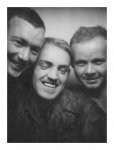
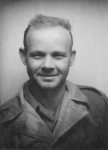
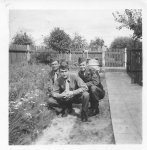
They all look pretty young to me.View attachment 6757
View attachment 6758
View attachment 6759
I believe that being clean shaven was a requirement whether there were showers or clean clothing available. I imagine there was quite a bit of shaves administered using helmet liners as the water container.
They cleaned up pretty good after VE Day (Third photo) stationed in Cham, Germany on POW Duty and preparing for the trip back to Le Havre to embark for the US.


