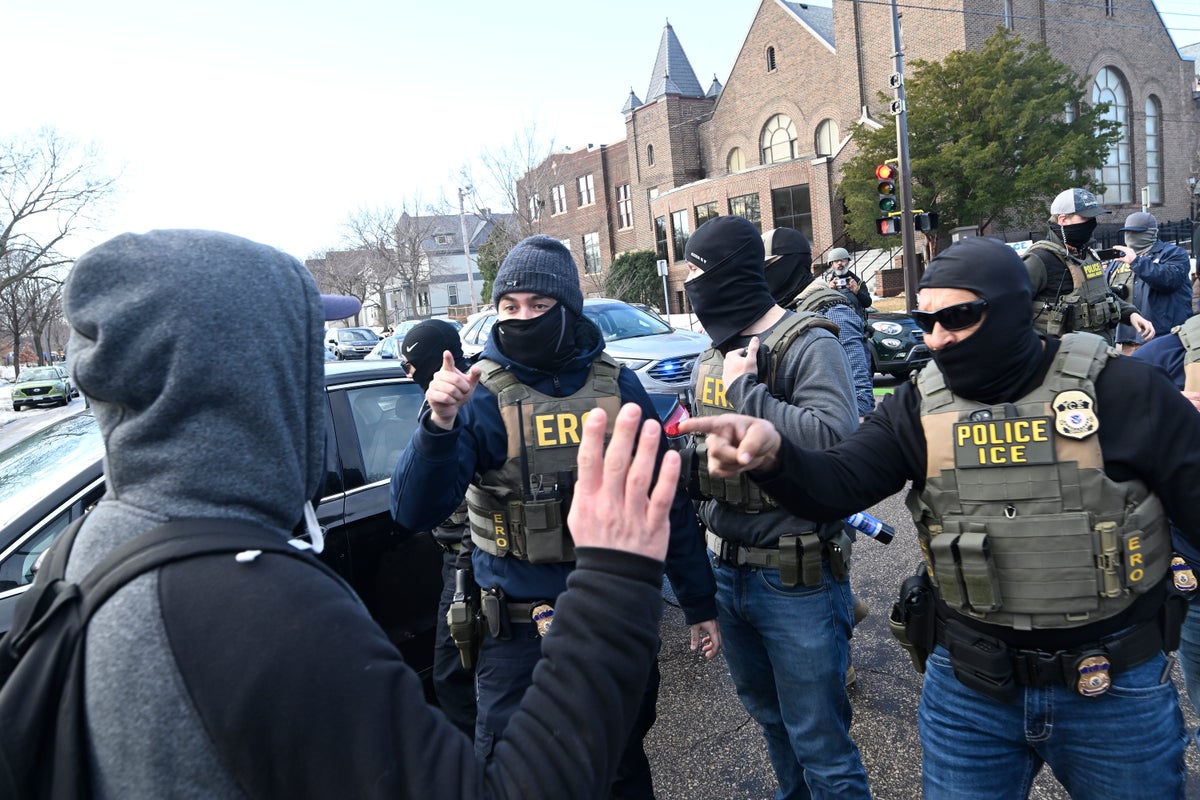
I asked Perplexity (AI) "How does ICE know whom to apprehend?"
This response is relatively clear.
ICE identifies people to arrest through a mix of federal policy “priorities,” information databases, and on‑the‑ground surveillance and referrals.
Who ICE focuses on
ICE’s formal priorities are set by the federal government and can change with each administration. Current guidance emphasizes people they say:
- Lack lawful immigration status (e.g., entered without inspection or overstayed a visa).
- Have certain criminal convictions or current criminal charges.
- Are labeled as threats to “national security” or “public safety.”
Even if someone is not a stated “priority,” ICE can still choose to arrest them if they are legally removable.
How ICE gets names
ICE rarely just “guesses” in the abstract; they usually get people’s information through:
- Shared law‑enforcement databases: When someone is arrested by local or state police, their fingerprints are checked against FBI and immigration databases, which can flag them to ICE.
- Jail and prison screenings: Under programs like the Criminal Alien Program, ICE regularly reviews people in local, state, and federal custody to see who is deportable and then issues immigration “detainers” asking jails to hold them for pickup.
- DMV and other government records: ICE can access state justice networks and DMV data to get addresses, license plates, and other identifying details.
- Prior immigration records: Old deportation orders, asylum denials, or visa files can all identify someone as a current enforcement target.
How ICE locates people
Once ICE has a target, agents work to find them physically. Common methods include:
- Field surveillance: Watching homes or workplaces, tracking daily routines, and confirming where the person lives or works so they can make an arrest.
- “Ruses” (deception): Pretending to be police, probation officers, or other officials, saying they have a lost ID, or that someone is a witness or suspect, to get a person to open the door or come outside.
- Home and workplace visits: Showing up early in the morning or at work sites with a name, photo, and sometimes old address information.
Large raids and quotas
In addition to individual arrests, ICE also runs larger operations and raids. These can be:
- Jail‑based sweeps tied to daily releases, using detainers and on‑site interviews.
- Neighborhood or worksite raids to meet daily arrest targets that have recently increased to several thousand arrests per day.
During broader sweeps, people who were not the original “target” can still be questioned and arrested if agents believe they are removable under immigration law.
One of the
sources for this information was the Ahmad & Associates (Immigration and Nationality Law) in McLean, Vir. They have posted this:
The Role of Immigration Detainers in ICE Detention
"When local or state law enforcement agencies, such as jails or prisons, identify a person who may be removable, they can place an immigration detainer on that individual. A detainer is essentially a request for the law enforcement agency to notify ICE before releasing the individual, allowing ICE to take custody of the person and move forward with deportation proceedings. This action helps to keep the individual in a secure setting until ICE can make its move.
It is important to note that while ICE can request detainers, not all law enforcement agencies are required to honor them.
Some jurisdictions may choose not to cooperate with ICE detainers due to local policies or political considerations.
In such cases, ICE may be forced to pursue individuals in the community, which can sometimes be more challenging and dangerous for both the individual and law enforcement officers."
How many ICE involved shootings have there been in jurisdiction cooperating with ICE to enforce immigration law? There may be a causal relationship between non-cooperation and violence.