Recruiting for the armed services is a function of a number of factors: state of the economy, level of enlistment bonuses, public perception of service, and ultimately, the population pool of military age men and women, etc.
The US has plenty of young people, but a significant portion of them are physically unfit for service. A significant portion of those who are fit have other prospects that do not involve separation from home and family, harsh service conditions, the loss of personal freedom, etc. Of the remaining, a number of criminal convictions which exclude them from service. Finally, the way service is seen has taken a hit lately. I have put hundreds of lieutenants into the Army. The overwhelming majority have done their time, resigned their commissions, and returned to private life. One of my lieutenants sent me a powerpoint presentation which she was ordered to read to her soldiers word for word on the integration of transgender soldiers. One of the slides said, "You may see a fellow soldiers in the communal shower with you whose genitalia do not match yours because they have not yet finished their transition. This is normal." She asked me how to say that to her soldiers in good conscience. I told her, "When you take the king's coin, you do the king's bidding." You do your duty to the best of your ability as long as it is your duty. She resigned as soon as she legally could. I think that being overly welcoming of transgender soldiers (for example) means the armed forces have gained a few hundred (very expensive) transgender soldiers, and has cost them tens of thousands of recruits from
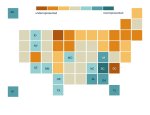
states that are disproportionately represented in the armed forces: Virginia, down to Texas and then up to Montana.
View attachment 46963
These mostly young men look at a recruiter and say, "Nah, I do not think I want to join
that military." You can tell service members now in the service, "Shut up, you're just going to do what you are told," but ultimately, when each soldier's service obligation end, he gets a vote.
Service conditions contribute to a difficult recruiting environment, low unemployment contributes, low enlistment bonuses contribute, but overall, it is a problem.