Trump's Policies Part 2

How long are you willing to suffer economic consequences waiting until we are "fine"? I guess that is really my question. All these this problems were created over decades of offshoring, all the solutions are long term solutions.
The chips are a special item. They are directly linked to our national security. Flip flops and umbrellas are not. Steel, aluminum, ship building, plane manufacturing, agriculture, and many other areas need to be produced in the US or at worst in an ally country not under the gun of a clearly enemy country like Taiwan is. Some things may have to cost more so we know we have them. This isn't true for most things, but we have to be real that we live in a dangerous world that can go sideways in a minute.
 
Unless you believe the Taiwanese are simply more intelligent than Americans, it's down to training.

No one thinks that all we have to do is build manufacturing facilities - part of the reason we've become a consumer nation is because we chased price over all else. Literally zero reason these chips (for example) cannot be manufactured at the same (if not higher) quality than anywhere else.

Bringing manufacturing back to America is not just good for Americans, it's a national security interest at this point. And we'll be fine.
On average they are and they dont wear stupid red hats.
 
How long are you willing to suffer economic consequences waiting until we are "fine"? I guess that is really my question. All these this problems were created over decades of offshoring, all the solutions are long term solutions.
As long as it takes to make sure we're handing our kids and grandkids a more stable economy. Someone is going to feel the pain of austerity and moves to rebuild American's manufacturing prowess, especially in areas of national security. Might as well be us as we know full well the previous generations didn't care enough to bite the proverbial bullet.

If these moves mean leaving future generations an America that is able to withstand / avoid foreign threats while being more financially solvent, I'm here for it. Fixing decades of shortcuts and fiscal sloth will take time and will be painful, but someone has to do it.

I'd much rather die poor knowing I tried to help upcoming generations than die wealthy knowing I did nothing but trade my kids' future for comfort now.
 
So you think Americans are unable to build these chips at a high level?

I think we can (and we are today.) I'm just not sure at what scale. There are huge cultural and education differences in the workforces in Asia vs the US. I think that contributes to the most of it. We aren't going to just "train" workers to make semiconductors. We need to focus on math and science in schools and push kids to want to be the engineers required to make this happen. That runs counter to the current war against education. Both are related and the GOP needs to get their story straight on what they want here.

Maybe that is a better way to say what Bamaro said, but they have the correct gist. The general dumbing down of America doesn't help this at all.
 
Last edited:
If it made sense to be made here, it would have already been made here. End of the day this will just mean more expensive products for the US consumer.
You mean if it makes financial sense to make it here. It's never going to make more sense to produce something in a country that pays workers $20/hour versus a country that pays $1/hour. The higher paying country will always lose in that competition.

So we sacrifice the futures of our children in order to still be able to buy cheap stuff from Walmart.
 
  • Thank You
Reactions: crimsonaudio
I said after the last election that we have a voting public that is myopic, with a short memory, and many times ignorant of history and basic facts. Bill Clinton convinced enough people that "it's the economy, stupid" when our economy had already had three positive quarters by election day 1992. You saw the same thing last November.

I don't want to "pick apart" your post here, and I'm about as far from being a fan of Bill Clinton as it is humanly possible to be. However, I reject the notion Clinton somehow tricked voters that the economy was bad, too. I think the more important lesson to be drawn is that NUMBERS BELIE HUMAN SUFFERING, both in 1992 and last fall.

What killed Bush's reelection chances in 1992 was unemployment, which stayed above 7% (and largely above 7.4%) for virtually all of 1992. The story has been told numerous times that Bush would look at the growth numbers (the one's you're citing) and could not understand why anyone was angry at him. Back then, 7% unemployment was far more common than it is today (it was above 7% when Reagan wiped out Mondale - but since it had been 11% just two years earlier, it "felt good"). This led Bush in Exeter, NH in January 1992 to say, "The fundamentals are darn good," which John McCain later used to his regret in the fall of 2008.

But when Bush was in New Hampshire campaigning, there were stores boarded up that had survived the Great Depression but couldn't continue in the 1990-91 recession. There were stories about a delivery service looking for a driver and paying just above minimum wage with no health benefits - and being inundated with applications 75 miles away from people desperate for work.

The growth numbers, of course, looked good if you divorced them from every day reality in 1992. Was the recession Bush's fault? No, not really. He just happened to be the poor guy in charge when it happened.

Same thing happened last fall.

I don't dispute your central point regarding voter naiveté - quite frankly, the average voter IS, in fact, dumber than the brick that wasn't thrown through Bill Curry's window. Less than half of the voters in any individual state can name even ONE Senator, and they have double the chance of getting that one right.

But the voters DO understand if they personally are affected RIGHT NOW by economic issues, whether it is unemployment, inflation, or a feeling of helplessness. The one reliable indicator poll-wise seems to be "the wrong track" number. Bush's wrong track number approached 70% in 1992, and even a number of journalists covering Bush who liked him saw Perot and Clinton - "two candidates with enough baggage to sink the Lusitania" - and thought "this one has to be the exception" but it wasn't.

 
since Trump took office, I have not seen any work done on the Silver Comet Trail connection project or the West Palisades project. The West Palissdes project in particular is a current mess.. The parking lot was dug up and is now just piles of dirt.
 
  • Thank You
Reactions: 92tide
since Trump took office, I have not seen any work done on the Silver Comet Trail connection project or the West Palisades project. The West Palissdes project in particular is a current mess.. The parking lot was dug up and is now just piles of dirt.
Curious how Trump being in office would affect a local green line - were they relying on federal funding?
 
Curious how Trump being in office would affect a local green line - were they relying on federal funding?
Palisades is part of the national park service, so maybe that?

The frustrating thing is the work was approved in 2016 and funding is there. They were doing work days before January 20th. Nothing since. Their website has no updates.
 
The chips are a special item. They are directly linked to our national security. Flip flops and umbrellas are not. Steel, aluminum, ship building, plane manufacturing, agriculture, and many other areas need to be produced in the US or at worst in an ally country not under the gun of a clearly enemy country like Taiwan is. Some things may have to cost more so we know we have them. This isn't true for most things, but we have to be real that we live in a dangerous world that can go sideways in a minute.

Agreed... we need to have and if necessary subsidize the ability to manufacture critical components here. I'd add pharmaceuticals capacity as well. So many of workhorse generic drugs are now made a single factory in China or India. One blip and we are out, and this is an ongoing issue with multiple drugs all the time.
 
Agreed... we need to have and if necessary subsidize the ability to manufacture critical components here. I'd add pharmaceuticals capacity as well. So many of workhorse generic drugs are now made a single factory in China or India. One blip and we are out, and this is an ongoing issue with multiple drugs all the time.
Once drugs go off patent then anyone with the capacity and funds can step in and compete. Then the only way to make money is to produce it cheaper then everyone else, either through lower labor costs or extreme automation advantages. American companies don't like to compete in markets where the cheapest supplier wins. They would rather cede that market to India or China, as you mentioned, and concentrate on those drugs still under patent.
 
  • Thank You
Reactions: Tidewater
Agreed... we need to have and if necessary subsidize the ability to manufacture critical components here. I'd add pharmaceuticals capacity as well. So many of workhorse generic drugs are now made a single factory in China or India. One blip and we are out, and this is an ongoing issue with multiple drugs all the time.
I didn't think about drugs as I was typing, but you are right. I've seen reports on tv and read articles about our lack of production of those things in country. Even if we don't make them here what about somewhere in the Western Hemisphere that is friendly to us. How about Argentina?
 
1741222404527.png
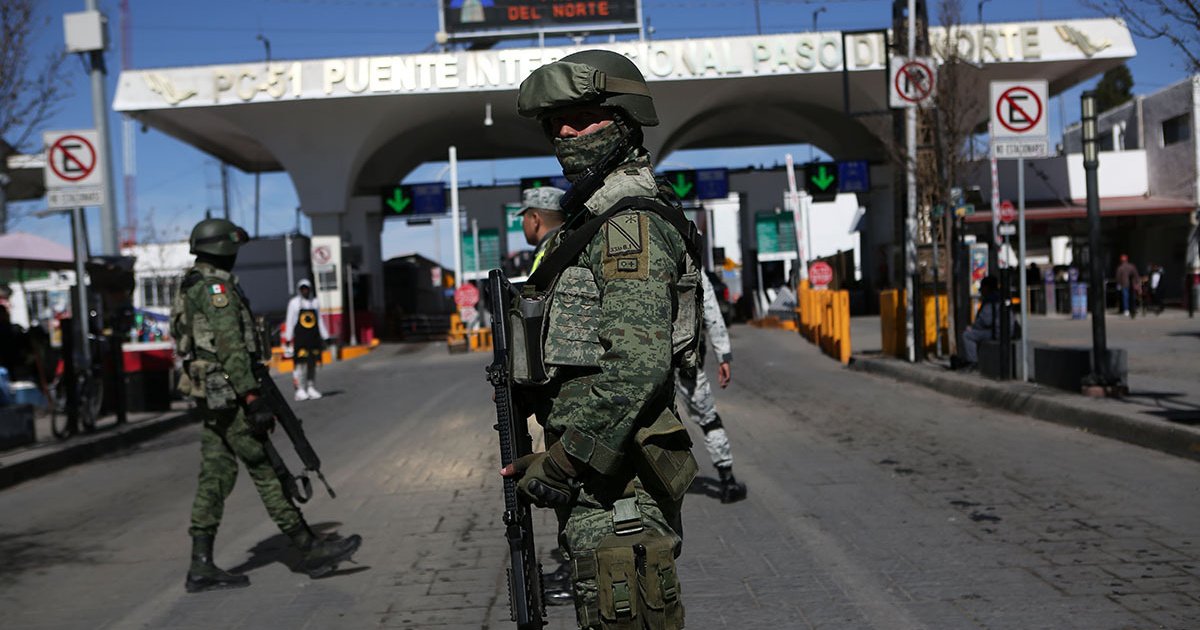
NYT: The number of people apprehended last year crossing from Canada into the United States illegally was nearly 24,000. (That pales in comparison to crossings from Mexico: Last year, more than 1.5 million people were apprehended at the U.S. southern border, U.S. government data shows.)

NPR: In 2024, only about 43 pounds of fentanyl was seized at America's northern border. That compares with roughly 21,100 pounds seized at the southern border.

Before these tariffs were announced, Canadian law enforcement had already moved to target and crack down on fentanyl producers, hoping to curb the overdose crisis occurring in their own country.


Canada plays virtually no role in the U.S. fentanyl influx, especially compared to the other countries. The country contributes less than 1 percent to its southern neighbor’s street fentanyl supply, as both the Canadian government and data from the DEA report.

Notably, Americans are heavily involved in the fentanyl crisis as well; U.S. citizens have accounted for around 90 percent [PDF] of fentanyl trafficking convictions in recent years.
 

New Posts

Advertisement

Trending content

Advertisement

Latest threads