


75th anniversary of D-Day...
- Thread starter crimsonaudio
- Start date
You are using an out of date browser. It may not display this or other websites correctly.
You should upgrade or use an alternative browser.
You should upgrade or use an alternative browser.


The guy on the right, who appears to be wearing a Tommy helmet, is not much older.The ages of the Hitler Jugend are unbelievable...

Just showed my 18 year old this picture. Very sobering. I bet the kid on the right is thinking, “I’m glad the Americans captured us and not the Communists!â€ÂThe guy on the right, who appears to be wearing a Tommy helmet, is not much older.

I think all the Germans who surrendered to the Brits or Americans were happy they could do so. At the end of 1946, the Soviets still had over a million Germans as slave laborers. By the end of 1948(!) that figure was still half a million.Just showed my 18 year old this picture. Very sobering. I bet the kid on the right is thinking, “I’m glad the Americans captured us and not the Communists!â€Â
Konrad Adenauer, Kanzler of West Germany in 1955, went to the Soviets and asked that the last of the German POWs still in Soviet hands be handed over.
Last edited:


I wondered if he were really a Brit or if they just loaned him a Tommy helmet and jacket. Someone posted this sign on the "Forgotten Alabama" Facebook group. I was unaware that Fort Rucker served as a POW camp. I wonder how the Germans and the Italians got along...The guy on the right, who appears to be wearing a Tommy helmet, is not much older.

I bet they segregated them.I wondered if he were really a Brit or if they just loaned him a Tommy helmet and jacket. Someone posted this sign on the "Forgotten Alabama" Facebook group. I was unaware that Fort Rucker served as a POW camp. I wonder how the Germans and the Italians got along...View attachment 7174
That's interesting, and probably not discoverable, but I'll try...I bet they segregated them.

April 7, 1945: On the western front, French paratroopers drop in front of Canadian 2nd Army overnight to help the advance. British 2nd Army is pushing across the Weser River at Minden and Stolzenau and driving toward Bremen. US 1st Army captures Göttingen and US 9th Army captures Eisenach and Hameln as both armies remain heavily engaged around the Ruhr pocket. US 3rd Army attacks and captures Friedrichroda, Tanbach, Oberhof, Themar, and Shleusingen while US 7th Army captures Neustad, attacks toward Schweinfurt, and bypasses strongly defended Heilbronn.British 2nd Army pushing across the Weser River at Minden and Stolzenau and driving toward Bremen. French 1st Army continues attacking around Pforzheim.
Private First Class Willy F. James, Jr. was an infantry scout assigned to Company G, 413th Infantry Regiment, 104th Infantry Division in April 1945. On April 7, 1945, he was lead scout during a maneuver to secure a bridgehead near Lippoldsberg, Germany. As his regiment crossed the Weser River, he was pinned down for more than an hour by enemy machine gun fire. When he was able to return to his platoon with his scouting observations, he helped to develop a new assault plan, designating targets in the new attack. When his platoon leader was mortally wounded, James went to his aid and was himself killed by machine gun fire. For his actions, he was posthumously awarded the Medal Of Honor - here is his citation:
“For extraordinary heroism on April 7, 1945, near Lippoldsberg, Germany. As lead scout during a maneuver, Pvt. James was the first to draw enemy fire. He was pinned down for over an hour, during which time he observed enemy positions In detail. Returning to his platoon, he assisted in working out a new plan of maneuver. He then led a squad in the assault, accurately designating targets as he advanced, until he was killed by enemy machine gun fire while going to the aid of his fatally wounded platoon leader.â€Â
PFC James was buried in the Netherlands American Cemetery and Memorial in the Dutch town of Margraten.
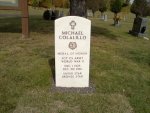
Mike Colalillo, serving as a private first class in Company C, 398th Infantry Regiment, 100th Infantry Division near Untergriesheim, Germany, when he encouraged his comrades to follow him into enemy fire, manned an exposed machine gun, and helped a wounded soldier back to friendly lines. For his actions during the battle, he was awarded the Medal of Honor on January 9, 1946. Here is his citation:
“Private First Class Mike Colalillo, 2d Squad, 2d Platoon, Co. C, 1st Battalion, 398th Infantry, 100th Infantry Division was pinned down with other members of his company during an attack against strong enemy positions on 7 April 1945 in the vicinity of Untergriesheim, Germany. Heavy artillery, mortar, and machine gun fire made any move hazardous when he stood up, shouted to his company to follow, and ran forward in the wake of a supporting tank, firing his machine pistol. Inspired by his example, his comrades advanced in the face of savage enemy fire. When his weapon was struck by shrapnel and rendered useless, he climbed to the deck of a friendly tank, manned an exposed machine gun on the turret of the vehicle, and, while bullets rattled around him, fired at an enemy emplacement with such devastating accuracy that he killed or wounded at least 10 hostile soldiers and destroyed their machine gun. Maintaining his extremely dangerous post as the tank forged ahead, he blasted three more positions, destroyed another machine gun emplacement and silenced all resistance in this area, killing at least three and wounding an undetermined number of riflemen as they fled. His machine gun eventually jammed; so he secured a submachine gun from the tank crew to continue his attack on foot. When our armored forces exhausted their ammunition and the order to withdraw was given, he remained behind to help a seriously wounded comrade over several hundred yards of open terrain rocked by an intense enemy artillery and mortar barrage. By his intrepidity and inspiring courage Private First Class Colalillo gave tremendous impetus to his company's attack, killed or wounded 25 of the enemy in bitter fighting, and assisted a wounded soldier in reaching the American lines at great risk to his own life.â€Â
Colalillo died in 2011 at age 86 and was buried at the Forest Hill Cemetery in Duluth, Minnesota, not far from his place of birth.
Over Germany, RAF Mosquito bombers raid Berlin from bases on the continent for the first time. US 15th Air Force attacks rail yards while US 8th Air Force attacks multiple targets with 1,261 bombers, of which 17 lost. RAF Bomber Command sends 186 aircraft to attack Molbis overnight. The Nazi’s launch Operation Werwolf - in a last ditch operation by the so-called Sonderkommando Elbe, the pilots of 183 Fw 190 and Bf 109K aircraft (flying to the strains of martial music played over the radio) are ordered to deliberately ram American B-17 bombers in kamikaze-like fashion. How many actually did so remains a mystery but 137 of the German aircraft were lost with 70 pilots killed. Only eight US heavy bombers were brought down.
To the east, German forces at Königsberg attempt a counterattack against the Soviet 3rd Belorussian Front attackers - although it inflicts heavy casualties on the Soviets, it ultimately fails. Soviet 2nd Ukrainian Front and 3rd Ukrainian Front continue assaulting Vienna. General Schörner's German Armeegruppe Mitte attacked the Soviet 2nd and 4th Ukrainian Fronts in Czechoslovakia. German Armeegruppe E completed its evacuation of Sarajevo, Yugoslavia.
In Italy, British 8th Army continues attacking across the Reno River andUS 5th Army captures Monte Belvedere. US 12th and US 15th air forces mostly grounded due to bad weather.
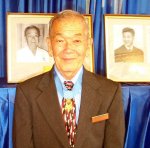
Yukio Okutsu, serving as a technical sergeant in the 442nd Regimental Combat Team on Mount Belvedere in Italy, single-handedly destroyed three enemy machine gun emplacements. He was awarded the Medal Of Honor for his actions. Here is his citation:
“Technical Sergeant Yukio Okutsu distinguished himself by extraordinary heroism in action on 7 April 1945, on Mount Belvedere, Italy. While his platoon was halted by the crossfire of three machine guns, Technical Sergeant Okutsu boldly crawled to within 30 yards of the nearest enemy emplacement through heavy fire. He destroyed the position with two accurately placed hand grenades, killing three machine gunners. Crawling and dashing from cover to cover, he threw another grenade, silencing a second machine gun, wounding two enemy soldiers, and forcing two others to surrender. Seeing a third machine gun, which obstructed his platoon's advance, he moved forward through heavy small arms fire and was stunned momentarily by rifle fire, which glanced off his helmet. Recovering, he bravely charged several enemy riflemen with his submachine gun, forcing them to withdraw from their positions. Then, rushing the machine gun nest, he captured the weapon and its entire crew of four. By these single-handed actions he enabled his platoon to resume its assault on a vital objective. The courageous performance of Technical Sergeant Okutsu against formidable odds was an inspiration to all. Technical Sergeant Okutsu's extraordinary heroism and devotion to duty are in keeping with the highest traditions of military service and reflect great credit on him, his unit, and the United States Army.â€Â
Okutsu died at age 81 and was buried in East Hawaii Veterans Cemetery No. 2, Hilo, Hawaii.
Pictured: Soviet slave laborers are rescued from a cellar after it had been locked and set on fire by a German policeman following the liberation of the city by the British VIII Corps, Second Army. Osnabrück, Lower Saxony, Germany. April 7, 1945.; Infantry of British 3rd Division clearing out snipers in the town of Lingen, April 7, 1945.; An M4A3E2 Sherman Jumbo of US 4th Armored Division passes a wrecked German SdKfz 7/2 Armoured Halftrack carrying an anti-aircraft gun (possibly the 3.7cm Flak 43).; Grave of Willy F. James Jr at Netherlands American Cemetery and Memorial.; Grave of Mike Colalillo at Forest Hill Cemetery in Duluth, Minnesota.; Medal of Honor recipient Yukio Okutsu in 2000.
Private First Class Willy F. James, Jr. was an infantry scout assigned to Company G, 413th Infantry Regiment, 104th Infantry Division in April 1945. On April 7, 1945, he was lead scout during a maneuver to secure a bridgehead near Lippoldsberg, Germany. As his regiment crossed the Weser River, he was pinned down for more than an hour by enemy machine gun fire. When he was able to return to his platoon with his scouting observations, he helped to develop a new assault plan, designating targets in the new attack. When his platoon leader was mortally wounded, James went to his aid and was himself killed by machine gun fire. For his actions, he was posthumously awarded the Medal Of Honor - here is his citation:
“For extraordinary heroism on April 7, 1945, near Lippoldsberg, Germany. As lead scout during a maneuver, Pvt. James was the first to draw enemy fire. He was pinned down for over an hour, during which time he observed enemy positions In detail. Returning to his platoon, he assisted in working out a new plan of maneuver. He then led a squad in the assault, accurately designating targets as he advanced, until he was killed by enemy machine gun fire while going to the aid of his fatally wounded platoon leader.â€Â
PFC James was buried in the Netherlands American Cemetery and Memorial in the Dutch town of Margraten.
Mike Colalillo, serving as a private first class in Company C, 398th Infantry Regiment, 100th Infantry Division near Untergriesheim, Germany, when he encouraged his comrades to follow him into enemy fire, manned an exposed machine gun, and helped a wounded soldier back to friendly lines. For his actions during the battle, he was awarded the Medal of Honor on January 9, 1946. Here is his citation:
“Private First Class Mike Colalillo, 2d Squad, 2d Platoon, Co. C, 1st Battalion, 398th Infantry, 100th Infantry Division was pinned down with other members of his company during an attack against strong enemy positions on 7 April 1945 in the vicinity of Untergriesheim, Germany. Heavy artillery, mortar, and machine gun fire made any move hazardous when he stood up, shouted to his company to follow, and ran forward in the wake of a supporting tank, firing his machine pistol. Inspired by his example, his comrades advanced in the face of savage enemy fire. When his weapon was struck by shrapnel and rendered useless, he climbed to the deck of a friendly tank, manned an exposed machine gun on the turret of the vehicle, and, while bullets rattled around him, fired at an enemy emplacement with such devastating accuracy that he killed or wounded at least 10 hostile soldiers and destroyed their machine gun. Maintaining his extremely dangerous post as the tank forged ahead, he blasted three more positions, destroyed another machine gun emplacement and silenced all resistance in this area, killing at least three and wounding an undetermined number of riflemen as they fled. His machine gun eventually jammed; so he secured a submachine gun from the tank crew to continue his attack on foot. When our armored forces exhausted their ammunition and the order to withdraw was given, he remained behind to help a seriously wounded comrade over several hundred yards of open terrain rocked by an intense enemy artillery and mortar barrage. By his intrepidity and inspiring courage Private First Class Colalillo gave tremendous impetus to his company's attack, killed or wounded 25 of the enemy in bitter fighting, and assisted a wounded soldier in reaching the American lines at great risk to his own life.â€Â
Colalillo died in 2011 at age 86 and was buried at the Forest Hill Cemetery in Duluth, Minnesota, not far from his place of birth.
Over Germany, RAF Mosquito bombers raid Berlin from bases on the continent for the first time. US 15th Air Force attacks rail yards while US 8th Air Force attacks multiple targets with 1,261 bombers, of which 17 lost. RAF Bomber Command sends 186 aircraft to attack Molbis overnight. The Nazi’s launch Operation Werwolf - in a last ditch operation by the so-called Sonderkommando Elbe, the pilots of 183 Fw 190 and Bf 109K aircraft (flying to the strains of martial music played over the radio) are ordered to deliberately ram American B-17 bombers in kamikaze-like fashion. How many actually did so remains a mystery but 137 of the German aircraft were lost with 70 pilots killed. Only eight US heavy bombers were brought down.
To the east, German forces at Königsberg attempt a counterattack against the Soviet 3rd Belorussian Front attackers - although it inflicts heavy casualties on the Soviets, it ultimately fails. Soviet 2nd Ukrainian Front and 3rd Ukrainian Front continue assaulting Vienna. General Schörner's German Armeegruppe Mitte attacked the Soviet 2nd and 4th Ukrainian Fronts in Czechoslovakia. German Armeegruppe E completed its evacuation of Sarajevo, Yugoslavia.
In Italy, British 8th Army continues attacking across the Reno River andUS 5th Army captures Monte Belvedere. US 12th and US 15th air forces mostly grounded due to bad weather.
Yukio Okutsu, serving as a technical sergeant in the 442nd Regimental Combat Team on Mount Belvedere in Italy, single-handedly destroyed three enemy machine gun emplacements. He was awarded the Medal Of Honor for his actions. Here is his citation:
“Technical Sergeant Yukio Okutsu distinguished himself by extraordinary heroism in action on 7 April 1945, on Mount Belvedere, Italy. While his platoon was halted by the crossfire of three machine guns, Technical Sergeant Okutsu boldly crawled to within 30 yards of the nearest enemy emplacement through heavy fire. He destroyed the position with two accurately placed hand grenades, killing three machine gunners. Crawling and dashing from cover to cover, he threw another grenade, silencing a second machine gun, wounding two enemy soldiers, and forcing two others to surrender. Seeing a third machine gun, which obstructed his platoon's advance, he moved forward through heavy small arms fire and was stunned momentarily by rifle fire, which glanced off his helmet. Recovering, he bravely charged several enemy riflemen with his submachine gun, forcing them to withdraw from their positions. Then, rushing the machine gun nest, he captured the weapon and its entire crew of four. By these single-handed actions he enabled his platoon to resume its assault on a vital objective. The courageous performance of Technical Sergeant Okutsu against formidable odds was an inspiration to all. Technical Sergeant Okutsu's extraordinary heroism and devotion to duty are in keeping with the highest traditions of military service and reflect great credit on him, his unit, and the United States Army.â€Â
Okutsu died at age 81 and was buried in East Hawaii Veterans Cemetery No. 2, Hilo, Hawaii.
Pictured: Soviet slave laborers are rescued from a cellar after it had been locked and set on fire by a German policeman following the liberation of the city by the British VIII Corps, Second Army. Osnabrück, Lower Saxony, Germany. April 7, 1945.; Infantry of British 3rd Division clearing out snipers in the town of Lingen, April 7, 1945.; An M4A3E2 Sherman Jumbo of US 4th Armored Division passes a wrecked German SdKfz 7/2 Armoured Halftrack carrying an anti-aircraft gun (possibly the 3.7cm Flak 43).; Grave of Willy F. James Jr at Netherlands American Cemetery and Memorial.; Grave of Mike Colalillo at Forest Hill Cemetery in Duluth, Minnesota.; Medal of Honor recipient Yukio Okutsu in 2000.
Attachments


I did not know that French paras dropped in WW II. It makes sense. The Allies had lots of transport aircraft with little to do. If French paras were ready to go, then send'em in.April 7, 1945: On the western front, French paratroopers drop in front of Canadian 2nd Army overnight to help the advance.
Last edited:
I wonder if the number of Congressional Medal of Honor awarded went up as the war approached the end of the fighting and whether this effect was caused by the fact that more witnesses and recommenders survived.
Personally, I think unbelievable acts of heroism happened at around the same pace (or were even more common earlier in the war), but too frequently the witnesses & recommenders were killed before the award decision could be made.
Getting a recommended MOH approved is tough (and it should be). Frequently the award recommendation goes up the chain, a panel reviews the packet, asks some clarification questions, which go back down the chain of command, get answered and sent back up. If the soldiers who witnessed the heroic act died between the act itself and submission of the award, or between submission and clarification questions, the award is likely to get downgraded to a Distinguished Service Cross (which is still no minor award).
An act of heroism in April 1945 was more likely to have the witnesses survive than the same act done in June 1944.
Personally, I think unbelievable acts of heroism happened at around the same pace (or were even more common earlier in the war), but too frequently the witnesses & recommenders were killed before the award decision could be made.
Getting a recommended MOH approved is tough (and it should be). Frequently the award recommendation goes up the chain, a panel reviews the packet, asks some clarification questions, which go back down the chain of command, get answered and sent back up. If the soldiers who witnessed the heroic act died between the act itself and submission of the award, or between submission and clarification questions, the award is likely to get downgraded to a Distinguished Service Cross (which is still no minor award).
An act of heroism in April 1945 was more likely to have the witnesses survive than the same act done in June 1944.
Last edited:
That would have been especially true, in an environment like Iwo Jima, where the mortality rate was so high. There were undoubtedly many acts of heroism which went unreported or unsupported...I wonder if the number of Congressional Medal of Honor awarded went up as the war approached the end of the fighting and whether this effect was caused by the fact that more witnesses and recommenders survived.
Personally, I think unbelievable acts of heroism happened at around the same pace (or were even more common earlier in the war), but too frequently the witnesses & recommenders were killed before the award decision could be made.
Getting a recommended MOH approved is tough (and it should be). Frequently the award recommendation goes up the chain, a panel reviews the packet, asks some clarification questions, which go back down the chain of command, get answered and sent back up. If the soldiers who witnessed the heroic act died between the act itself and submission of the award, or between submission and clarification questions, the award is likely to get downgraded to a Distinguished Service Cross (which is still no minor award).
An act of heroism in April 1945 was more likely to have the witnesses survive than the same act done in June 1944.

My father, a career Navy man, always told me that Navy Cross recipients received the same level of respect that MOH recipients received from their peers. The bar is so high to receive the MOH and all of the various service combat crosses as to be almost indistinguishable.I wonder if the number of Congressional Medal of Honor awarded went up as the war approached the end of the fighting and whether this effect was caused by the fact that more witnesses and recommenders survived.
Personally, I think unbelievable acts of heroism happened at around the same pace (or were even more common earlier in the war), but too frequently the witnesses & recommenders were killed before the award decision could be made.
Getting a recommended MOH approved is tough (and it should be). Frequently the award recommendation goes up the chain, a panel reviews the packet, asks some clarification questions, which go back down the chain of command, get answered and sent back up. If the soldiers who witnessed the heroic act died between the act itself and submission of the award, or between submission and clarification questions, the award is likely to get downgraded to a Distinguished Service Cross (which is still no minor award).
An act of heroism in April 1945 was more likely to have the witnesses survive than the same act done in June 1944.
Same dynamic at play in Okinawa is about to play out in Brad's narrative, although probably Oki was slightly less deadly to participants than Iwo was.That would have been especially true, in an environment like Iwo Jima, where the mortality rate was so high. There were undoubtedly many acts of heroism which went unreported or unsupported...
A friend of mine got one of his soldiers over the hump two years ago (posthumously). Tough slog, but yes, for me, the difference in respect for a MOH winner and a DSC winner is miniscule, and whether one was awarded the MOH or DSC depends not on the heroism, but the award submission and circumstances.My father, a career Navy man, always told me that Navy Cross recipients received the same level of respect that MOH recipients received from their peers. The bar is so high to receive the MOH and all of the various service combat crosses as to be almost indistinguishable.
At Ft. Benning, Home of the Infantry, the gallows humor is that you have to get killed to have a shooting range named after you.
Darn near true.
I've read that Okinawa was what caused Truman to drop the bombs, that he could see an invasion of Japan as being like Okinawa from one end to the other...Same dynamic at play in Okinawa is about to play out in Brad's narrative, although probably Oki was slightly less deadly to participants than Iwo was.
Found that exact quote.I've read that Okinawa was what caused Truman to drop the bombs, that he could see an invasion of Japan as being like Okinawa from one end to the other...
Unconditional Surrender, Demobilization, and the Atomic BombAfter Franklin Roosevelt died on 12 April, the new president, Harry S. Truman, told his military advisers about his hopes "of preventing an Okinawa from one end of Japan to the other." He probably overstated the danger, fearing the invasion could kill 500,000 Americans, "the flower of our young manhood,"
“Casualty figures were largely the product of the American experience on Saipan and Okinawa. Using the "Saipan ratio," staff officers predicted American casualties could reach 1.7 to 2 million, though by the spring of 1945 this number had declined to 500,000. They knew, however, that the Soviet Red Army had suffered 352,000 casualties attacking Berlin in the closing days of the European war. The Army made plans to recruit and train 720,000 soldiers to replace those injured, killed, or otherwise indisposed in the invasions. It also ordered the production of 400,000 Purple Hearts.â€Â
- Stephen L. McFarland, 1997
It is of course, important to remember that "casualties" includes killed, wounded, missing, and captured. In the chaos of battle a guy who did not answer his name at roll call the next morning could be captured, he could have been blown to bits, but if nobody saw it, he would just be "missing."
Last edited:

I wonder too if recommendations came easier (along with more surviving witnesses), but just because the war was "going better" for the US and soldiers felt better about what was happening? I guess i'm trying to say it's easier to write someone up for something good when mentally, you're in a better state too. If that makes sense.I wonder if the number of Congressional Medal of Honor awarded went up as the war approached the end of the fighting and whether this effect was caused by the fact that more witnesses and recommenders survived.
Personally, I think unbelievable acts of heroism happened at around the same pace (or were even more common earlier in the war), but too frequently the witnesses & recommenders were killed before the award decision could be made.
Getting a recommended MOH approved is tough (and it should be). Frequently the award recommendation goes up the chain, a panel reviews the packet, asks some clarification questions, which go back down the chain of command, get answered and sent back up. If the soldiers who witnessed the heroic act died between the act itself and submission of the award, or between submission and clarification questions, the award is likely to get downgraded to a Distinguished Service Cross (which is still no minor award).
An act of heroism in April 1945 was more likely to have the witnesses survive than the same act done in June 1944.
Maybe, but men bounce back pretty quickly with rest, chow and a shower.I wonder too if recommendations came easier (along with more surviving witnesses), but just because the war was "going better" for the US and soldiers felt better about what was happening? I guess i'm trying to say it's easier to write someone up for something good when mentally, you're in a better state too. If that makes sense.
From the war I know the best, during the Late Unpleasantness, Confederate soldiers painted battle honors on their battleflags, just like their Union counterparts.
The early-war battle of Seven Pines was the only one I know of that had an exclamation point. To the soldiers at Seven Pines, that battle was so ferocious that they could not imagine a battle tougher than Seven Pines.

By 1865, men on both sides would consider that a big skirmish.
Last edited:
Maybe I'm just wired differently, but I'll go to my grave believing if you have the ability to end the war and avoid "just" 500k casualties on your side, you go for it.“Casualty figures were largely the product of the American experience on Saipan and Okinawa. Using the "Saipan ratio," staff officers predicted American casualties could reach 1.7 to 2 million, though by the spring of 1945 this number had declined to 500,000. They knew, however, that the Soviet Red Army had suffered 352,000 casualties attacking Berlin in the closing days of the European war. The Army made plans to recruit and train 720,000 soldiers to replace those injured, killed, or otherwise indisposed in the invasions. It also ordered the production of 400,000 Purple Hearts.â€Â
- Stephen L. McFarland, 1997


Trending content


Latest threads
-
-
 ESPN: Chanticleers hire Missouri State's Beard as HC
- Started by TideFans Reporter
- Replies: 0
-
ESPN: Southern Miss promotes Anderson to head coach
- Started by TideFans Reporter
- Replies: 0
-
-
ESPN: Vols add ex-Penn St. DC Knowles on 3-year deal
- Started by TideFans Reporter
- Replies: 0
-
ESPN: Moore remains in custody; no decision on charges
- Started by TideFans Reporter
- Replies: 1