
The report I heard on npr is that they may have had engine problems
Based on the wikipedia page, it looks like it has one engine with no backup. I'm assuming it is diesel electric.


The report I heard on npr is that they may have had engine problems


Hollywood is genuinely stumped regarding why less and less people are going to the movies nowadays. I think part of the problem is that movies like this are no longer being made.

Harbor pilots are SOP at most ports.I don't know much more but my wife's family has a former harbor master in it and that is the way I understand how it works in these large important ports. At a certain point it is turned over to harbor pilots when coming in and going out. Been years since I've spoken with him





i remember that sign from "the wire"Good before view of the Francis Scott Key bridge:
The ship struck the bridge support just to the right of the Domino sign.


It had not even occurred to me that the port is blocked. I was thinking more in terms of how trucks are going to get to the port. It was awful in Memphis when the Hernando DeSoto bridge across the Mississippi River was closed down. Traffic to get through Memphis and across the older bridge was horrible.

this is going to wreak havoc on supply chains. the port of baltimore is an important oneIt had not even occurred to me that the port is blocked. I was thinking more in terms of how trucks are going to get to the port. It was awful in Memphis when the Hernando DeSoto bridge across the Mississippi River was closed down. Traffic to get through Memphis and across the older bridge was horrible.
This is a several layers worse. The old bridge wreckage will have to be removed before the port can even become usable. I don't know if they'll drag it out to sea and sink it or cut it up into manageable pieces. Then, a whole new bridge will have to be designed and built. This could take years.

this is going to wreak havoc on supply chains. the port of baltimore is an important one
The Port's private and public terminals handled 847,158 autos and light trucks in 2023, the most of any U.S. port for the thirteenth straight year.
In 2023, the Port ranked first in the nation in handling automobiles, light trucks, farm and construction machinery, as well as imported sugar and gypsum. The Port ranked second in the country for exporting coal. In 2022, the Port ranked sixth for importing coffee, 119,000 tons worth $609 million.
i lost my previous job in large part due to lingering post-covid logistical nightmares around the globe, and that was after we thought everything had shaken out in container shippingPlease no, not another "it's the supply chain" excuse we'll hear for the next five years for everything under the sun.

I had the exact same thought. I keep expecting my conspiracy theorist friends to tell me something along the lines of: "ship fuel can't melt steel bridges." I know it's coming.The way the whole thing collapsed so fast made it look kind of flimsy.
An average cargo vessel weighs ~165,000 tons. I doubt many bridge supports are designed to withstand a hit by something that massive. And once the support goes, gravity wins.I had the exact same thought. I keep expecting my conspiracy theorist friends to tell me something along the lines of: "ship fuel can't melt steel bridges." I know it's coming.
Agreed. And even though your chances of winning the lottery are probably higher than being on a bridge during a collapse, I still hate driving over one. They were all built by the lowest bidder, anyway. The idea that one could withstand high levels of structural damage without collapsing is just unrealistic (I think.)An average cargo vessel weighs ~165,000 tons. I doubt many bridge supports are designed to withstand a hit by something that massive. And once the support goes, gravity wins.
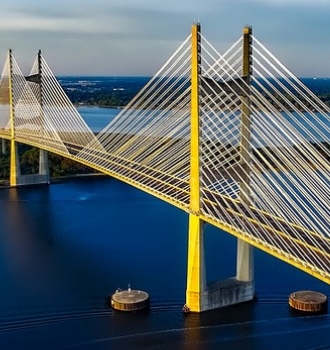
 infrastructurereportcard.org
There are more than 617,000 bridges across the United States. Currently, 42% of all bridges are at least 50 years old, and 46,154, or 7.5% of the nation’s bridges, are considered structurally deficient, meaning they are in “poor†condition. Unfortunately, 178 million trips are taken across these structurally deficient bridges every day. In recent years, though, as the average age of America’s bridges increases to 44 years, the number of structurally deficient bridges has continued to decline; however, the rate of improvements has slowed. A recent estimate for the nation’s backlog of bridge repair needs is $125 billion. We need to increase spending on bridge rehabilitation from $14.4 billion annually to $22.7 billion annually, or by 58%, if we are to improve the condition. At the current rate of investment, it will take until 2071 to make all of the repairs that are currently necessary, and the additional deterioration over the next 50 years will become overwhelming. The nation needs a systematic program for bridge preservation like that embraced by many states, whereby existing deterioration is prioritized and the focus is on preventive maintenance.


